
Depletion-Mode Field-Effect Transistors from ARK Microelectronics

Depletion-Mode Field-Effect Transistors from ARK Microelectronics
Depletion-mode? Only in the name. In practice, this is a transistor that starts working immediately - it doesn’t wait for a control signal.
Depletion-Mode Field-Effect Transistors - Why Are They Worth Knowing
In the semiconductor market, the vast majority of manufacturers focus on enhancement-mode MOSFETs, which are the typical “normally-off” devices. These transistors require a gate-source voltage to begin conducting. This behavior is convenient and safe, which is why it has become the standard in power electronics and digital circuitry.
However, alongside them exists a lesser-known but highly valuable group of devices - depletion-mode transistors, often referred to as “normally-on.” With zero gate-source voltage, these transistors already conduct current, and only an appropriate control voltage can turn them off. They are an excellent choice for applications that must operate immediately upon power-up or where minimizing losses in startup circuits is critical.
Why Are Depletion-Mode Transistors Less Popular?
The standard design philosophy in electronics prioritizes safe default states, meaning devices should remain off unless explicitly activated. This is exactly what enhancement-mode MOSFETs provide, which explains their dominance. Their mass production is optimized to deliver extremely low RDS(ON) values and outstanding switching performance. Depletion-mode transistors, on the other hand, are considered more specialized components - used in cases where the “normally-on” characteristic offers unique advantages. As a result, their market is smaller, but in certain applications they are the ideal solution.
Key Advantages of Depletion-Mode Transistors
- Normally-on operation - At zero gate bias the transistor behaves like a closed switch or resistor. This greatly simplifies circuits that must start operating without additional control electronics.
- Perfect for startup and auxiliary circuits - In switching power supplies, they can replace startup resistors, reducing power losses and part count while improving reliability and efficiency.
- Simple current sources and constant-load elements - Their inherent I-V characteristics make them suitable for compact, stable current sources or active resistors in analog circuits.
- Safety and fail-safe behavior - In many applications, a depletion-mode device ensures current flow even when the control circuitry is not yet active. It can serve as an “emergency-on” element, improving system robustness.
- Excellent properties for high-frequency designs - Low input capacitances make certain models suitable for RF and communication circuits.
Micros, as an authorized representative of ARK Microelectronics in Poland, provides access to the original components of this manufacturer. Our status is confirmed by an official certificate:

ARK Microelectronics - A Specialist in Depletion-Mode Transistors
ARK Microelectronics is the only company in China that consistently focuses on the design and development of depletion-mode field-effect transistors. While most semiconductor manufacturers limit their offerings to standard enhancement-mode devices, ARK has specialized for years in this technological niche, which requires unique expertise and dedicated fabrication processes. With a strong R&D foundation - including experienced engineers with long-standing industry backgrounds and close cooperation with leading technical universities in China and abroad - the company holds nearly 70 patents and full intellectual property rights for its products. This enables ARK Microelectronics to maintain a leading position in the Chinese market, offering solutions that serve as a real alternative to MOSFETs from major global manufacturers.
If you want to check current stock levels and prices, click on the product symbols.
|
Symbol |
Package |
VDS |
ID |
RDS(ON) |
PD |
Equivalent for: |
|
|
SOT223 |
100V |
300mA |
3Ω |
1,5W |
BSP129 |
|
|
SOT223 |
600V |
150mA |
40Ω |
1,5W |
BSP135 |
|
|
SOT223 |
100V |
400mA |
3Ω |
1,5W |
BSP149 |
|
|
SOT223 |
600V |
80mA |
150Ω |
1,5W |
BSP135 |
|
|
SOT223 |
600V |
100mA |
60Ω |
1,5W |
BSP135 |
|
|
SOT23 |
60V |
20mA |
2,5Ω |
500mW |
- |
|
|
SOT23 |
100V |
100mA |
30Ω |
500mW |
BSS126 |
|
|
SOT23 |
150V |
100mA |
25Ω |
500mW |
BSS169 |
|
|
SOT23 |
150V |
100mA |
25Ω |
500mW |
BSS159N, BSS169 |
|
|
SOT23 |
150V |
200mA |
15Ω |
500mW |
BSS169, MMBF4393 |
|
|
SOT23 |
150V |
200mA |
15Ω |
500mW |
BSS169, MMBF4393 |
|
|
SOT23 |
100V |
200mA |
6Ω |
500mW |
BSS169 |
|
|
SOT23 |
600V |
20mA |
700Ω |
500mW |
BSS126 |
|
|
SOT23 |
600V |
20mA |
150Ω |
500mW |
BSS126 |
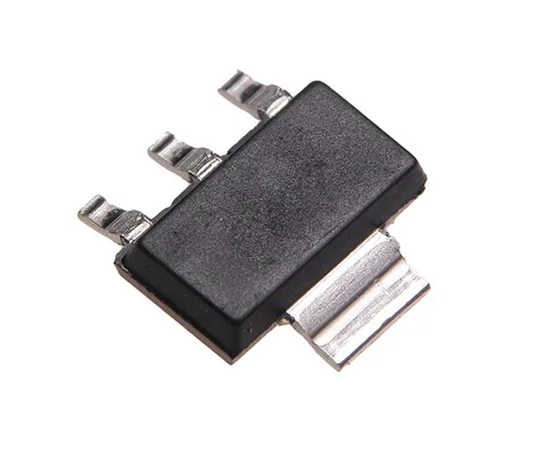
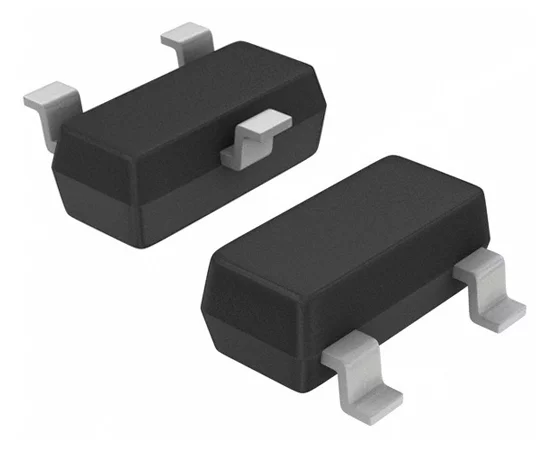
Table 1. ARK Microelectronics Transistors in the Micros Offer