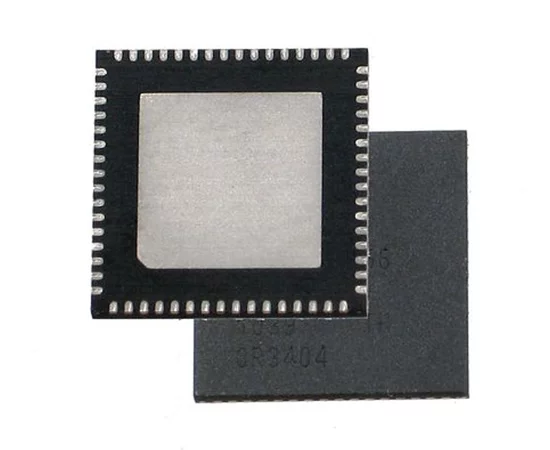
LT8912B IC from Lontium Semiconductor - a bridge between mobile and stationary worlds
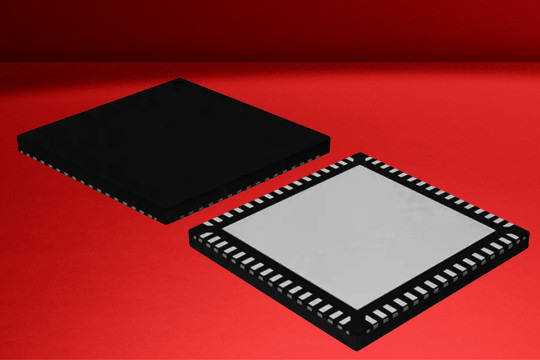
What is the LT8912B?
The LT8912B in a QFN64 package is a bridge IC that converts MIPI DSI signals to LVDS or HDMI. It allows digital MIPI interface signals to be output as LVDS or HDMI. MIPI (Mobile Industry Processor Interface) is a communication standard mainly designed for mobile devices, and DSI (Display Serial Interface) is a MIPI variant used to transmit image data from a processor to a display. LVDS (Low Voltage Differential Signaling) is a robust low-voltage differential data transmission standard, widely used in industry due to its noise immunity, long cable support, and low power consumption. HDMI (High-Definition Multimedia Interface) is a standard for transmitting high-quality audio and video, typically used in TVs, monitors, and projectors.
When is MIPI DSI → LVDS/HDMI conversion needed?
Chips like the LT8912B are used when a CPU/SoC only offers MIPI DSI output, but the display accepts only LVDS, or when we want to connect an external HDMI monitor.
Mobile processors (Snapdragon, MediaTek, Exynos), many embedded SoCs (NXP i.MX, Rockchip, Allwinner), and devices such as smartphones, tablets, Raspberry Pi CM or HMI panels often provide only MIPI DSI output, which creates the need for bridge ICs such as the LT8912B.
Typical Uses:
- DSI → LVDS: industrial displays, HMI terminals, medical devices
- DSI → HDMI: media boxes, development boards, single-board computers
The LT8912B also enables external audio input via I²S or SPDIF and merges audio with MIPI DSI video, outputting a complete A/V signal over HDMI.
Signal Parameters
MIPI DSI Input:
- Lanes: 1-4 data lanes + 1 clock lane
- Data rate: 80 Mb/s to 1.5 Gb/s per lane
- Supported formats: RGB666 (18 bpp), RGB888 (24 bpp)
LVDS Output:
- Lanes: 4 data lanes + 1 clock lane
- Data rate: up to 1 Gb/s per lane
- Pixel clock: 25 MHz to 154 MHz
HDMI Output:
- Standard: HDMI 1.4
- Max resolution: 1920×1080 @ 60 Hz, 8-bit color
Key Features and Capabilities
- Configurable data lane order and polarity for MIPI DSI - Simplifies PCB/FPC routing and enables software correction if lane order or polarity is miswired.
- Built-in termination resistor auto-calibration - Eliminates the need for external termination and automatically adjusts impedance to ensure reliable operation at gigabit speeds.
- Adjustable signal compensation for MIPI channels - Enables 4-step correction to counteract signal degradation and ensure stable transmission.
- Supports only Non-Burst mode - Operates only when MIPI clock and data are continuous; Burst mode is not supported.
- Built-in scaler for DSI → LVDS conversion - Allows compatibility between mismatched resolutions from the processor and display.
- Reduced LVDS output amplitude for EMI reduction - Helps meet EMC requirements and reduces the need for extra shielding components.
- Automatic or manual HDMI amplitude calibration - Allows HDMI output adjustment either automatically or via register configuration.
- Supports HDMI Hot-Plug Detect (HPD) - Enables automatic configuration and Plug & Play capability.
- No DDC support for HDMI - Resolution and timing must be manually configured in the SoC; otherwise a display may not show an image.
- No HDCP support - Protected DRM content cannot be played. Suitable for industrial displays, prototypes, test modules, but not consumer multimedia players requiring HDCP.
Summary - Advantages of LT8912B
- Bridges mobile (MIPI DSI) and desktop/industrial (LVDS, HDMI) interfaces.
- Supports FullHD @ 60 Hz.
- Integrates audio for HDMI (I²S/SPDIF).
- Supports 18-bit and 24-bit color formats.
If you want to check current stock levels and prices, click on the product symbol.
| SYMBOL | DESCRIPTION |
|---|---|
|
|
Single Channel MIPI DSI Bridge to LVDS/HDMI, 80Mbps÷1.5Gbps, 1.8V, -40÷85°C |